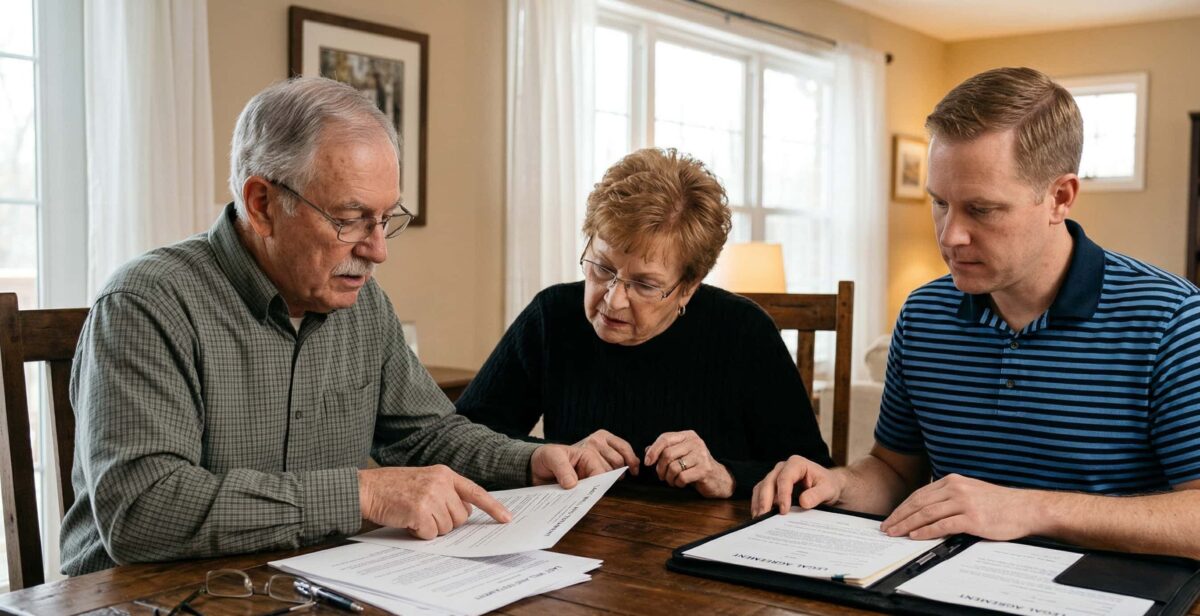
If you own property in Spain and want to ensure it passes to your heirs in the most straightforward and cost-effective way possible, early planning makes a significant difference. The tax outcome varies considerably depending on where the property is located.
This article covers the main legal tools available — coordinated wills, lifetime gifts, corporate structures and life insurance — and explains how they apply to foreign owners. At Ábaco Advisers, we work with non-resident property owners from the UK, Sweden, Belgium, the Netherlands, Poland and beyond to put inheritance plans in place before they become urgent.
Why does Spanish inheritance planning catch foreign owners off guard?
Spanish inheritance tax can reach 34% at national level, must be paid within six months of death, and the outcome varies significantly depending on where the property is located.
Inheritance tax in Spain — the Impuesto sobre Sucesiones y Donaciones (ISD), governed by Ley 29/1987, de 18 de diciembre — is levied on the heirs, not the estate. It operates on a progressive scale that rises from 7.65% to 34% at national level, with additional multipliers applied based on the heir’s pre-existing wealth.
What makes it particularly complex for foreign owners is the regional variation. Spain’s autonomous communities have the power to set their own reductions and bonifications on top of the national framework. In some regions, direct heirs — children, spouses — can pay close to nothing. In others, the tax bill on a mid-range property can be substantial.
Until recently, non-residents were restricted to the national scale. This changed with the reform introduced by Ley 11/2021, de 9 de julio, which amended Article 32 of Ley 29/1987. Since then, all non-residents — regardless of nationality — are entitled to apply the regional rules of the autonomous community where the Spanish property is located. This is a meaningful improvement for non-resident owners whose heirs would previously have been taxed at the national rate by default.
The other pressure point is the payment deadline: under Article 67 of Ley 29/1987, heirs must file and pay within six months of the date of death. A six-month extension can be requested, but interest applies. For heirs living abroad, organising liquidity and paperwork within that window is a genuine practical challenge.
What succession rules apply to your Spanish property?
Spanish forced heirship rules reserve two-thirds of the estate for descendants by default, limiting the testator’s freedom to distribute assets freely.
The Spanish Código Civil (Arts. 806–808) divides the estate into three parts:
- Legítima estricta (one third): must be distributed equally among all children and descendants
- Mejora (one third): can be distributed among descendants more freely, but cannot bypass them entirely
- Libre disposición (one third): the testator can leave this to anyone they choose
For international buyers, this structure can come as a real surprise. You cannot simply leave your Spanish property to one child, a partner, or a charity without accounting for these rules — unless you have expressly elected a different law to apply.
Can you choose a different law to govern your inheritance?
Yes — under EU Succession Regulation 650/2012, you can elect for your national law to govern your entire estate, including Spanish assets.
Under EU Regulation 650/2012, any EU national has the right to elect their national law to apply to their entire estate, including property held in Spain. British nationals retain access to this regulation post-Brexit and are treated equivalently for this purpose. This election must be stated explicitly in a Spanish will — it is not automatic.
For buyers from countries with more flexible succession laws than Spain — notably the UK, Sweden and the Netherlands — this election can make a meaningful practical difference: it may allow the property to be distributed more freely than Spanish forced heirship rules would otherwise permit. For nationals of countries with similarly restrictive systems, the practical effect may be more limited.
Should you make a Spanish will — and how should it work with your home country will?
Yes. A Spanish will simplifies the inheritance process considerably for your heirs, but it must be carefully scoped alongside any will you already have in your home country.
A Spanish will is drawn up before a notary, signed in two languages, and registered at the Registro Central de Actos de Última Voluntad in Madrid. The practical advantages for your heirs are significant:
- no official translation required
- no Foreign Office or home country legal involvement
- no risk of delays caused by jurisdictional complexity
The key risk of having two wills — one in Spain, one in your home country — is that a home country will written to cover “all assets worldwide” can, if dated after the Spanish will, override the Spanish document in practice. To avoid this, both wills must be explicitly scoped: the Spanish will to Spanish assets only, and the home country will to assets in that jurisdiction.
Couples should note that Spanish law does not recognise joint wills — each person must prepare a separate document.
There is also a straightforward tax planning point: dividing the property between multiple heirs in the will means each heir benefits from their own individual threshold and reductions, rather than a single heir paying tax on the full value.
What are the main strategies to reduce the inheritance tax burden?
The most effective approach is usually a combination of coordinated wills, lifetime gifts, and appropriate financial planning — each with different conditions and advantages depending on the owner’s profile.
Coordinated wills — the essential foundation
Coordinated wills are the starting point for any plan involving assets in more than one country. In practice, this means ensuring:
- the Spanish will is explicitly limited to Spanish assets
- the home country will is explicitly limited to that jurisdiction
- both are consistent in their intentions and dated appropriately
- any election under EU Regulation 650/2012 is clearly stated in the Spanish will
For Scandinavian and Benelux buyers, whose national succession laws tend to be more flexible than Spain’s, the election of national law is particularly worth modelling.
Lifetime gifts (donación de bienes) — transferring property before death
A lifetime gift of Spanish property is legally possible and, in some circumstances, more tax-efficient than an inheritance. The process — governed by Article 3.1.b of Ley 29/1987 — involves signing a new title deed before a notary as part of the donación de bienes process. The ISD applies at the time of the gift, based on the current market value of the property.
The key considerations are:
- in regions with generous donation reductions , the tax cost for direct family transfers can be very low
- in regions where donation reductions are more limited, donating now may cost more than waiting — a pre-transfer tax simulation is essential
- donating the property does not prevent the donor from continuing to live in it, though all legal decisions pass to the new owners from that point
Corporate structures — relevant for high-value or complex estates
Holding Spanish property through a Sociedad Limitada (SL) can offer structural advantages in specific situations: high-value properties, multiple heirs with different circumstances, or owners with clear investment objectives. The primary mechanism is that heirs inherit shares in the company rather than the property directly, which can offer greater flexibility.
This is not a general-purpose solution. An SL introduces annual administrative and accounting obligations, potential taxation on notional rental income if the property is not commercially let, and additional complexity on eventual sale or dissolution.
Life insurance to fund the tax liability
Life insurance does not reduce the inheritance tax owed, but it solves the liquidity problem: heirs have the funds to pay within the six-month deadline without being forced to sell the property. This approach is particularly relevant where:
- the Spanish property represents the majority of the estate
- heirs are based abroad and would struggle to mobilise funds quickly
- the property has appreciated significantly and the likely tax bill is substantial
The policy must be structured carefully, with the correct beneficiary designation, and the cost modelled against the protection it provides.
Does the location of the property in Spain affect the outcome?
Significantly. Since Ley 11/2021 confirmed that all non-residents can access regional rules, the autonomous community where the property is situated has become the dominant factor in determining the actual tax cost.
The table below gives a general indication. Regional rules can change, and individual circumstances always affect the final calculation — the figures should be treated as a planning reference, not a guarantee.
| Autonomous community | Bonification for direct heirs (children/spouse) |
| Madrid | Up to 99% (near-zero effective tax) |
| Andalucía | Up to 99% |
| Murcia | Up to 99% |
| Cantabria | Up to 90% |
| Balearic Islands | Progressive reductions; significant for lower-value estates |
| Valencia | Reductions available, up to 99% |
| Catalonia | More limited; national scale closer to applicable |
A practical illustration: a property worth €300,000 inherited by two children in Madrid or Andalucía would attract minimal effective tax under current regional rules. The same property in a region without substantial bonifications could generate a combined tax bill of €20,000–€30,000 or more, depending on the heirs’ pre-existing wealth and applicable multipliers.
In conclusion
Protecting your Spanish property inheritance comes down to making deliberate choices about legal structure, timing and documentation — before those decisions are made under pressure. Coordinated wills, the election of national law, lifetime gifts, corporate holding and life insurance can each play a role. No single approach fits all cases, and the most effective plans usually combine more than one tool.
If you would like to understand what the right steps are for your property and your family’s circumstances, the team at Ábaco Advisers offers a free initial consultation in your language.
Frequently asked questions
Can a non-resident choose which country’s law governs their Spanish inheritance?
Yes. Under EU Regulation 650/2012, any EU national — and British nationals, who are treated equivalently — can elect for their national law to govern their entire estate, including Spanish assets. This election must be stated explicitly in a Spanish will and is not the default position.
Will my home country will automatically cover my Spanish property?
Not reliably. A home country will that covers “all assets worldwide” and is dated after your Spanish will could, in certain circumstances, override it. Both documents should be explicitly scoped by jurisdiction to avoid this conflict.
Is it better to donate my Spanish property to my children now or wait?
It depends on the region, the current value, and whether the regional rules treat donations as generously as inheritances. In some autonomous communities donations attract the same reductions; in others they do not. A pre-transfer simulation is essential before deciding.
Can both Spain and my home country tax the same Spanish property on death?
Potentially, yes. Generally, there are no double taxation treaties to avoid inheritance tax.
How long do heirs have to pay Spanish inheritance tax?
Under Article 67 of Ley 29/1987, heirs must file and pay within six months of the date of death. A six-month extension can be requested, though interest accrues. This is one of the main reasons why liquidity planning — through life insurance or accessible savings — matters for heirs based abroad.

It might be of your interest...



No comments yet
There are no comments on this post yet.
Leave a comment