
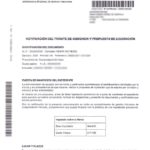
If you have a property in Spain you may have received a letter from the tax office querying your tax status. If you have, it is important not to ignore it but to provide the information needed. We explain what you should do.
The Spanish Tax Office is sending communications to property owners in Spain when, according to the information available in its records, there is no evidence that a tax return has been filed.
The communication is normally based on information provided by the Spanish Cadastre, which allows the Tax Office to identify who has owned a property in Spain during specific tax years. In many cases, the letter refers to previous years and informs the taxpayer that they may regularise their situation before the Tax Office starts a formal review procedure.
Why have I received a letter?
If you have received this communication, it means that the Spanish Tax Office has information showing that you have owned one or more properties in Spain, but it cannot find the corresponding tax returns for those years.
This might have happened because you were not aware you needed to file a tax return and no one had informed you about it. Whatever your reason, the letter does not necessarily mean you will receive a fine but that you are being given the opportunity to put your house in order.
Non-residents who don’t rent out their Spanish home
The Modelo 210 is the non-resident income tax return. You may wonder why you should file an income tax return when your property has not been rented out and is used only as a holiday home or is kept empty.
This is one of the most common misunderstandings among foreign property owners. Many believe that if they do not receive rental income, they do not need to file any tax return in Spain. However, even though you don’t make income from your property, you could if you wanted to, as it is your second home. This is called ‘imputed income tax’ and a tax return is needed.
Non-residents who do rent out their Spanish home
If the property has been rented out, the non-resident owner must declare the rental income received through Modelo 210. Depending on the owner’s country of tax residence, there are expenses that can be deducted, and these can be explained to you by a tax adviser. Different filing deadlines may apply depending on the rental income and the period concerned.
Spanish tax residents
If you are tax resident in Spain, the relevant tax return would normally not be Modelo 210, but Modelo 100, the annual Personal Income Tax return. For this reason, the first step after receiving this type of letter is to confirm whether, during the years mentioned, you were tax resident or non-resident in Spain.
This distinction is essential, as it determines which tax return should be filed and how the tax should be calculated.
What you should do next
If you have received a letter then it is important to take action. Firstly, you will need to confirm whether you were a tax resident or a non-resident for the periods specified.
If you were a non-resident you need to state whether your property was:
- used privately or kept empty.
- rented out.
- sold during the tax year.
- jointly owned by more than one person.
Each situation may have different tax consequences. Ignoring the letter is not advisable as if no action is taken the Tax Office may start a formal tax procedure. This could result in surcharges, interest being applied or even penalties. For these reasons it is advisable to review the situation as soon as possible.
Can we help?
Completing Spanish tax forms correctly is not an easy matter and most people choose to ask a professional to help them. At Ábaco Advisers we can help you review your situation and regularize it so you do not need to worry.
Together with our tax team you can:
- Check which tax years are mentioned in the letter.
- Confirm whether you were tax resident or non-resident in Spain during those years.
- Review whether you owned one or more properties in Spain.
- Check whether the corresponding tax returns were filed.
- Confirm whether the property was empty, used privately, rented out or sold.
- Calculate any pending tax, if applicable.
- File any missing tax returns before a formal review procedure begins.
Frequently Asked Questions (FAQs)
Does a letter from the Spanish Tax Office mean I am getting a fine?
Not necessarily. In many cases, the Agencia Tributaria sends a preventive communication informing you that they have no record of a tax return for your property, giving you the opportunity to regularise your situation voluntarily before a formal inspection or penalty procedure begins.
Why do I have to pay tax in Spain if I don’t rent out my property?
Non-resident property owners in Spain are subject to “imputed income tax” (renta inmobiliaria imputada). Even if your property is empty or used strictly as a holiday home, you must file an annual Modelo 210 tax return.
What happens if I ignore a letter from Hacienda?
Ignoring a communication from the Spanish Tax Office can lead to a formal tax review procedure, which often results in late payment interest, surcharges, and financial penalties.

It might be of your interest...


No comments yet
There are no comments on this post yet.
Leave a comment