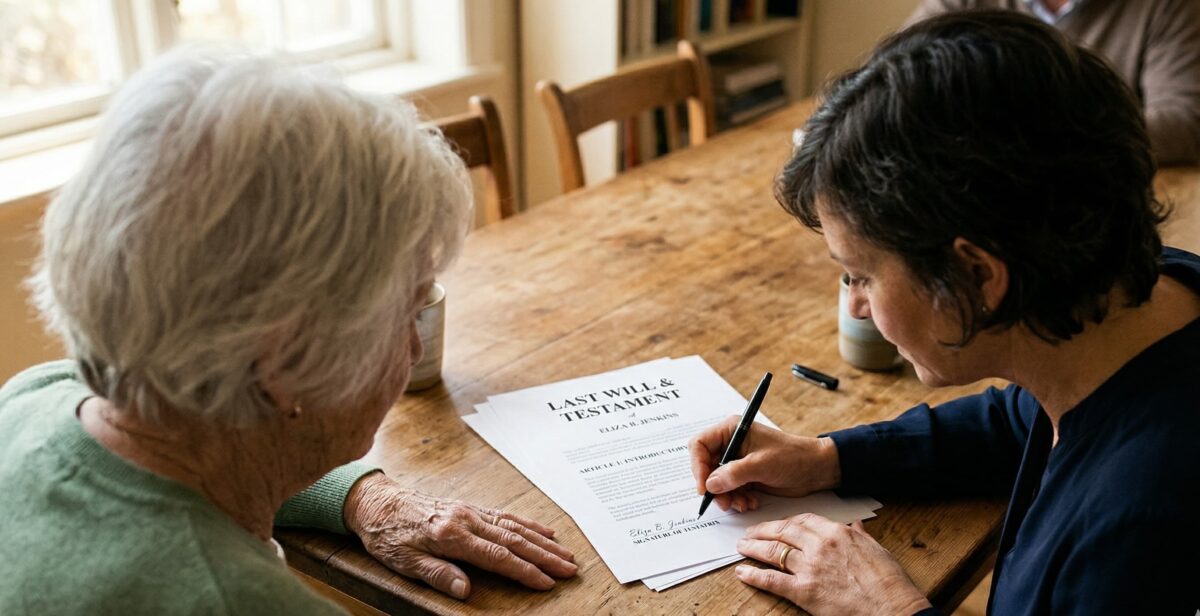
If you own property in Spain, EU Succession Regulation 650/2012 — commonly known as Brussels IV — is one of the most important pieces of legislation you have probably never heard of. It determines which country’s inheritance rules govern your Spanish estate when you die, and it gives you the right to choose your national law instead of the default. Without a valid declaration in your Spanish will, that choice is lost — and the consequences for your heirs can be significant. At Ábaco Advisers, we work with independent legal specialists to help foreign property owners in Spain understand exactly what this regulation means for their estate and take the right steps before it is too late.
What is the EU succession regulation?
Regulation (EU) No 650/2012, which came into force on 17 August 2015, establishes a single, harmonised framework for determining which country’s succession law governs a cross-border estate. Before its introduction, EU member states applied contradictory criteria — some used the deceased’s nationality, others their habitual residence, and others the location of the asset — creating serious legal uncertainty for families administering estates across borders.
The regulation applies in all EU member states except Denmark and Ireland. Crucially, it covers both EU and non-EU nationals who hold assets within the EU, so it is directly relevant to British, Swedish, Belgian, Dutch, Polish and Czech property owners in Spain regardless of where they are resident.
What law applies to your Spanish estate if you do nothing?
The default rule under Article 21 of the regulation is clear: the law of the country where the deceased was habitually resident at the time of death governs the entire estate, including assets located in other countries.
This means that if you are a Dutch national who has been living in Spain for several years, and Spain is considered your habitual residence, Spanish succession law will apply to your Spanish property — not Dutch law.
Determining whether you are a resident or non-resident in Spain is not straightforward. It is not the same as tax residency, and it is not determined by where you hold a passport. Spanish notaries and courts will look at the overall picture:
- where you spent the majority of your time
- where your social and family life was centred
- where you had your closest personal and professional ties
- the regularity and duration of your stays in each country
For non-resident property owners who split their time between Spain and their home country, this can be genuinely ambiguous. In cases of doubt, it is always safer to have the question answered before you die rather than leave it to your heirs to argue.
Can you choose which law governs your inheritance?
Yes — and this is the most practically useful feature of the regulation. Under Article 22, any individual may choose the law of a country of which they are a national to govern their succession. This is known as a professio iuris and must be made explicitly. It does not apply automatically.
For most foreign property owners in Spain, choosing their national law is significant because it avoids the Spanish forced heirship system (explained below), which can severely restrict how you distribute your estate.
How do you make a valid choice?
The choice of law must be made in writing. The most effective and legally reliable method is to include a specific clause in a Spanish notarial will (testamento abierto), signed before a Spanish notary and registered at the Registro General de Actos de Última Voluntad in Madrid. The clause must expressly state that you choose the law of your nationality to govern your succession.
If you have a will in your home country but no Spanish will, there are significant practical risks:
- the foreign will requires official translation and authentication with the Hague Apostille before it can be used in Spain. It is not sufficient to have a foreign will unless it is registered with the Register of Last Wills and Testaments in Madrid; rather, a declaration of heirs issued by the competent authority in your country based on that will is required.
- it may not include a valid Brussels IV choice clause
- the process adds time, cost and complexity for your heirs at an already difficult moment
Making a dedicated Spanish will is strongly recommended for anyone with Spanish assets, even if a will already exists in your home country.
What are the advantages and disadvantages of each option?
When Spanish law may work against you
Under Articles 806–808 of the Spanish Civil Code, a significant proportion of every Spanish estate is reserved by law for specific heirs. This is the legítimas system, and it works as follows:
| Portion of estate | Spanish legal term | Who it goes to |
| 1/3 | Legítima estricta | Descendants (mandatory, equal shares) |
| 1/3 | Mejora | Descendants (testator can allocate among them) |
| 1/3 | Libre disposición | Freely distributed by the testator |
This means that two-thirds of your estate are legally reserved for your children and descendants. The remaining third is the only portion you can leave freely to a partner who is not your spouse, a close friend, a charity, or anyone else of your choosing.
For property owners from Northern European countries — where testamentary freedom is broader — this can produce outcomes very different from their expectations, particularly when the estate includes a single property of significant value.
It is important to note that the choice of applicable succession law does not affect Spain’s inheritance tax (Impuesto sobre Sucesiones y Donaciones). Tax obligations are determined separately and continue to apply regardless of which country’s succession rules govern the distribution.
When your national law is the better choice
The table below summarises the key differences between Spain’s forced heirship system and the rules applicable in Ábaco’s main target markets:
| Country | Forced heirship? | Who benefits | Approximate forced share | Testamentary freedom |
| Spain | Yes | Descendants | 2/3 of estate | Limited (1/3 freely disposable) |
| England & Wales | No forced share* | — | — | High |
| Scotland | Yes (legitim) | Children | 1/3 of moveable estate | Moderate |
| Sweden | Yes (laglott) | Children | 1/2 of intestate share | Moderate |
| Netherlands | Yes (legitieme portie) | Children | 1/2 of intestate share | Moderate |
| Belgium | Yes | Children | Consult specialist | — |
| Poland | Yes (zachowek) | Children / spouse / parents | Consult specialist | — |
| Czech Republic | Yes | Children | Consult specialist | — |
* In England and Wales, dependants may make a claim under the Inheritance (Provision for Family and Dependants) Act 1975, but there is no automatic forced share.
How does this affect your heirs in practice?
The consequences of not making a valid Brussels IV choice are concrete and costly. If you die without a Spanish will that includes a choice of law clause, your heirs are likely to face some or all of the following:
- the forced application of Spanish legítimas, even if this contradicts your wishes, only if the deceased was a resident of Spain
- the obligation to have a foreign will officially translated and apostilled before it can be processed in Spain, including other supporting documents, such as the certificate of heirship.
- potential disputes between heirs who expected the estate to be distributed differently
- longer administration timelines and higher legal fees at an already stressful time
There is also a tax planning dimension that should not be overlooked. While the choice of succession law does not change the inheritance tax rules, the way the estate is structured can affect the total tax burden. Distributing the estate among multiple heirs, for example, means that each beneficiary benefits from their own individual tax threshold — which can meaningfully reduce the overall tax payable. An independent adviser can help model different scenarios before a decision is made.
In conclusion
EU Regulation 650/2012 is a powerful tool for foreign property owners in Spain — but only for those who use it. Without a valid choice of law clause in a Spanish notarial will, the default rules apply, and the outcome may be very different from what you intended. The key points to retain are:
- the default rule is the law of your habitual residence at death — not necessarily your home country’s law
- a valid choice must be declared in writing, ideally in a Spanish notarial will
- Spanish forced heirship (legítimas) reserves two-thirds of the estate for descendants and cannot be overridden without a valid Brussels IV clause
- the choice of succession law does not affect Spain’s inheritance tax obligations
- UK, Swedish, Belgian, Dutch, Polish and Czech owners each face different considerations — generic advice is rarely sufficient
If you own property in Spain and do not yet have a Spanish will with a Brussels IV clause, this is worth addressing. At Ábaco Advisers, we can connect you with independent legal specialists who will review your specific circumstances and help you protect your estate for the people you care about.
Frequently asked questions
Does EU Regulation 650/2012 apply if I am not an EU citizen?
Yes. Brussels IV applies based on the location of the assets and the habitual residence of the deceased, not on whether the individual’s home country is an EU member state. Non-EU nationals — including British nationals post-Brexit — can make a valid choice of law under the regulation in favour of their national law.
What happens if I have a will in my home country but no Spanish will?
If your foreign will does not include a Brussels IV choice of law clause, the default rules apply and Spanish law (or the law of habitual residence) will govern your Spanish estate. Even where a clause is included, applying a foreign will in Spain requires official translation, apostille certification and additional legal steps. A Spanish will avoids this entirely.
Can I choose the law of any country, or only my nationality?
Under Article 22, you can only choose the law of a country of which you are a national. You cannot choose Spanish law simply because you own property there unless you hold Spanish nationality. If you have dual nationality, you may be able to choose either country’s law.
Does choosing my national law affect the inheritance tax my heirs pay in Spain?
No. The choice of applicable succession law determines how your estate is distributed and who inherits what. It does not change Spain’s inheritance tax obligations. Your heirs will still need to file and pay Impuesto sobre Sucesiones y Donaciones on the Spanish property they inherit.
What if I change my mind after making a Brussels IV choice in my will?
You can change or revoke the choice of law by making a new Spanish will. All Spanish wills are registered at the Registro General de Actos de Última Voluntad in Madrid, and the most recent will supersedes earlier ones. If your circumstances change — such as acquiring a second nationality or moving permanently to Spain — it is worth reviewing your will and the choice of law clause with your legal adviser.

It might be of your interest...



No comments yet
There are no comments on this post yet.
Leave a comment